
|
|
Extraction of mescaline from Trichocereus panchanoi
PDF version
San Pedro (Trichocereus or Echinopsis panchanoi) is a fast-growing columnar cactus native to the Andes of Peru and Ecuador. Peruvian Torch (Trichocereus peruvianus or Echinopsis peruviana) is a similar species with longer spines. They can be grown indoors in the UK and are also available in powdered form. Estimates of mescaline content vary but most contain around 0.5% by dry weight (cacti are at least 90% water). Eating the raw cactus is very nauseating and delays the onset of effects, while aqueous extractions are inefficient and give poor yields. Chemical methods however are highly efficient and even crude extractions reduce the amount of material consumed to minuscule proportions.
Theory
Traditionally an acid-base extraction is used, although acidification is not strictly necessary. After removing the spines the cactus is chopped up and pureed in a blender with deionised water. It is then basified with sodium hydroxide and extracted with a non-polar solvent, usually at least three times - shaken, not stirred! The mescaline freebase is highly soluble in the non-polar but virtually insoluble in the aqueous phase, so the non-polar is separated off and evaporated to give a crude extract. The preferred choice of non-polar for this application is xylene, as freebase mescaline is virtually insoluble in the more readily available naphtha (lighter fluid). Toluene can be used as a less smelly alternative to xylene but forms an emulsion after shaking and can't be fully separated with a pipette from dilute acid. Mescaline will remain in solution when xylene is placed in a freezer, so this is a convenient method for separating the phases and reduces fumes. Mescaline salts can be produced, if required, by shaking the extracted non-polar solvent with a solution of a volatile or non-volatile acid. A pH meter can be used to determine when the extraction is complete, as the reading should not increase after shaking with the non-polar and separating off. (Ensure that the meter is dried thoroughly after use as any residual xylene will attack the plastic casing.) Citric acid is safest to use, although non-volatile, so any excess acid will be present in the end product. Hydrochloric acid is volatile and should be evaporated off in a fume cupboard ideally, as the fumes are extremely hazardous. Acetic acid (distilled vinegar) also creates highly acidic fumes when concentrated but is less suitable as the resulting salt absorbs moisture from the atmosphere.
Chemicals and Equipment
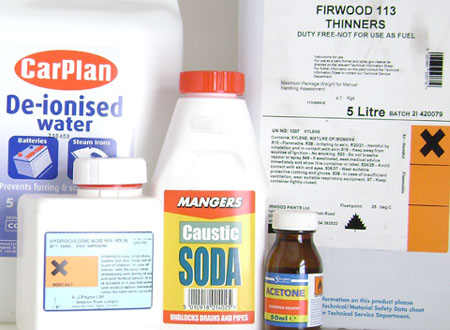
Deionised Water (from any car accessory shop)
Sodium Hydroxide (Caustic Soda - for unblocking drains from DIY stores)
Xylene (xylene paint thinners) or Toluene (less smelly but forms emulsions)
Hydrochloric Acid (optional)
Acetone (optional)
Safety goggles and rubber gloves
Preserving jar or bottle
Funnel
Rectangular Pyrex dish
Cloth to cover dish
Single edged razor blade
Scalpel
Fume mask when using xylene
 |
 |
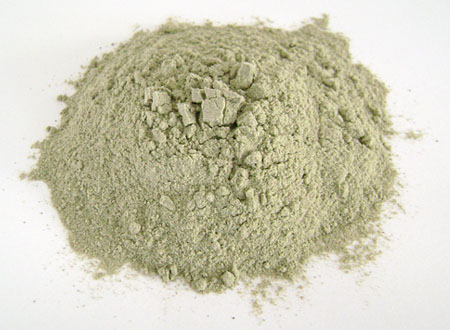
Cactus Powder |
Chemicals |
Method
SAFETY GOGGLES AND RUBBER GLOVES MUST BE WORN AT ALL TIMES
WHEN HANDLING CAUSTIC SODA AND HYDROCHLORIC ACID
1. Add 500 ml deionised water to a preserving jar or bottle. Then add 25 g of caustic soda while wearing protective goggles and gloves. Allow enough space for shaking. The caustic soda will need shaking to dissolve, or the bottle base will become very hot. Once dissolved add 50 g powdered San Pedro - a large bore funnel is useful if using a bottle. Shake the bottle - initially the powder will form into a solid lump. Leave the basified cacti for a few days to thin out.
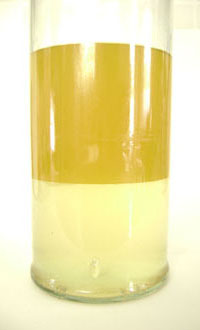
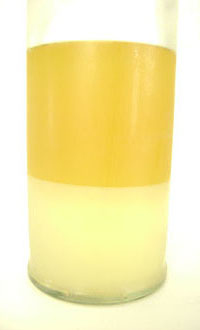
2. Add at least 10% xylene to the volume, recap the jar or bottle and warm to hand hot in a water bath (around 50 ºC). Remember that xylene fumes are flammable. (Storing xylene in a freezer will reduce the fumes or wear a mask with a charcoal filter.) Loosen and retighten the lid to release any pressure. (If necessary, wrap PTFE plumbing tape around a plastic wine cork to get a tight fit, but ensure that it is held firmly during agitation.) Care is required if using plastic screw cap bottles as they can deform and leak when heated excessively. The bottle must now be shaken vigorously for at least a minute while wearing protective goggles and gloves - the mescaline shuffle! Vigorous agitation will create an emulsion but gives a much greater yield than gentle agitation. Heat will not clear the emulsion but it should resolve gradually by repeatedly freezing and thawing. Once frozen there should be a clear partition between the solid caustic soda solution and the (now green) xylene floating on top, which can be poured in another sealed container. A number of freezing and thawing cycles are required to remove all the xylene - avoid hot water with frozen glass bottles as they may crack. The lid should be tight, although it may need hot water to unfreeze it, as xylene vapour will taint any food in the freezer. If the lid is left loose then secure Clingfilm over the opening with an elastic band or use plumbing tape to prevent fumes.
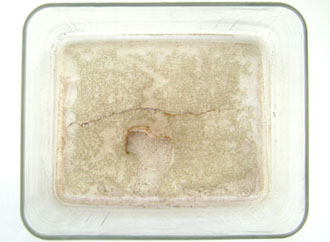
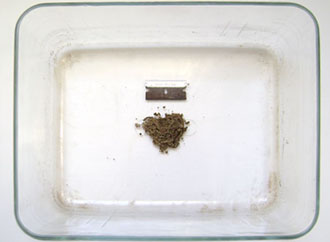
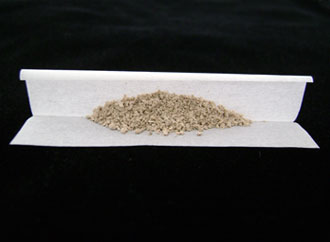
3. Pour the collected xylene into a rectangular Pyrex dish. Cover the dish with a cloth to keep out dust and insects and leave in a well ventilated area until all the xylene has evaporated (preferably outdoors in a garage or shed). Remember that xylene fumes are flammable. You should be left with waxy deposits with tiny crystals which can be scraped up with a single edged razor blade. The extract can be scraped off the razor with a scalpel into a Rizla paper - keep the scalpel blade in a wine cork when not in use. The process should be repeated at least once. The most active extract is dark in colour, while later extractions will consist of green waxy material.
If hydrochloric acid is available a hydrochloride salt can be produced which makes measurement of dosage more accurate and enables the xylene to be reused. To create pure white crystals hydrogen chloride gas is bubbled through the non-polar solvent. Aqueous extractions will produce a brown powder which although less attractive is perfectly adequate and far less hazardous to produce. Ten drops of 10% HCl solution by volume (v/v) are added to deionised water and shaken in a sealed container with the collected xylene, after warming to hand hot in a water bath. The phases are separated by freezing. Pour the xylene back into the basified cactus container and thaw the aqueous phase - avoid hot water with frozen glass bottles as they may crack. The liquid is then evaporated in a rectangular Pyrex dish on a hotplate outdoors or in a well ventilated area, away from people or animals. The resulting extract can be rinsed in acetone (ideally anhydrous) to remove the sticky green material, making handling easier. Scrape all the extract into one corner of the rectangular Pyrex dish, tilt and add acetone with a pipette (as it is difficult to pour). Mix the extract thoroughly in the acetone, allow to settle, then slowly tip the acetone out of the opposite corner of the dish, removing any residue with a tissue. Repeat if necessary. Dry the dish on a hotplate, then powder the extract by chopping with a single edged razor blade. The (now yellow) xylene should be reused to extract the remaining mescaline from the basified cactus powder.
For health and safety reasons the amount of HCl used should be minimal and safety
goggles and rubber gloves must be worn at all times.
Mescaline freebase is C11H17NO3, molar mass
211 g/mol. HCl has molar mass 36.5 g/mol. (H=1, C=12, N=14, O=16, Cl=35.5)
50 g of dried San Pedro might contain at most 1% mescaline = 0.5 g.
This would be neutralised with a solution of deionised water containing 86.5 mg HCl (36.5/211 x 500 mg).
A 10% solution by volume (v/v) of HCl contains 105 g/litre, so this would require 0.824 g of solution (1000/105 x 86.5 mg).
A drop weighs around 50 mg so around 16 drops of 10% HCl solution would be required in total.
The freebase content of mescaline hydrochloride is 85% (211/247.5).
 |
 |
 |
 |
 |
Magnetic Stirrer |
Before shaking |
After shaking |
After freezing |
Hotplate |
 |
 |
 |
Dried Extract |
Shavings |
Extract rinsed in acetone |
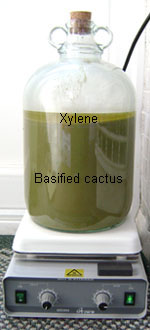
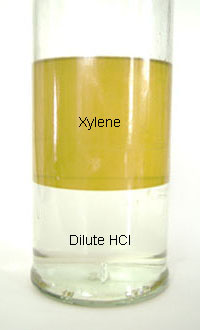
These pictures show a bulk extraction using a gallon demijohn with a magnetic stirrer. The previous demijohn cracked under heat and the caustic soda removed the paint from the top of the hotplate - so this one is not being heated! Use a cork bung in preference to a rubber one which will swell from xylene exposure. It is left on slow stir for several hours which is preferable to shaking as it doesn't create any emulsion. Getting the stir bar centred is quite tricky - it can be held with a strong magnet on the outside and lifted to the top centre of the demijohn and dropped back in. Once it falls into the right position avoid turning the speed up too quickly or you will have to start again! It can take 24 hours to freeze the basified cactus in the demijohn. It's best to pour the xylene off into the bottle first before adding dilute acid, in case the aqueous phase in the demijohn hasn't frozen completely, so you can pour it back and freeze it for a bit longer if necessary. Once the dilute acid in the bottle has frozen, the xylene is poured back into the demijohn for a second extraction. Repeat the process until no more extract is produced. (Almost all of the mescaline should be removed from the xylene in a single extraction if the bottle is warmed and shaken vigorously - wear safety goggles and rubber gloves.) A small quantity of yellow xylene will remain on top of the dilute acid after separation by freezing. The bulk of the dilute acid can be removed with a glass poultry baster and a pipette will separate the last portion (impossible with toluene as it forms an emulsion). The dilute acid is thawed and evaporated on the hotplate outdoors.
To remove some of the impurity before extracting with dilute acid, the xylene can be washed with deionised water with a little caustic soda added (to ensure that the mescaline remains in freebase form). Again the phases are separated by freezing. The extract shown above in the Rizla was produced by this method. The shavings shown above were produced without washing the xylene first. Acetone will remove the sticky material but not the dark colour.
It can take several xylene extractions to remove all the mescaline from the basified cactus, although the process could be expedited using a 5 litre borosilicate Erlenmeyer flask, which can be heated while slowly being magnetically stirred, to avoid emulsion. 5 mm aluminium sheet should be placed under the flask as its base area considerably exceeds the dimensions of most hotplates. Phase separator paper can be used as an alternative to freezing or using a separatory funnel. The paper is impregnated with silicone which retains the aqueous phase while passing the solvent phase through. Available from Camlab - at a price!
Using mescaline
The usual caveats apply with any psychedelic about being in a safe environment and having someone with you, particularly if you are inexperienced. The extract from 50 g of powdered San Pedro should produce powerful effects - best to start at half this dose. Mescaline hydrochloride can be taken dissolved in water or in an enteric coated capsule to avoid the bitter taste and stomach irritation (although capsules can disintegrate if stored). Effects start to kick in within an hour and should last around eight. Mescaline has a noticeable stimulant effect, unlike other natural psychedelics such as psilocybin and DMT. Higher doses can be overwhelmingly powerful and have considerably longer duration. If sleep is difficult the sedating antihistamine cyproheptadine (Periactin), or diphenhydramine (Nytol, Paxidorm) can give a pleasant comedown, without the hangover of benzodiazepines. Zaleplon, Zolpidem and Zopiclone are more powerful sleeping tablets, but can be habit-forming if used regularly. (Diphenhydramine is available from pharmacies and z-drugs can be procured online, with the bonus of endless unsolicited email for potions to perk up your sex life!)
In case of adverse effects, have drinking water handy in a plastic cup or bottle. Absolutely no glass. Caffeinated drinks should be avoided as should alcohol, cannabis or any other drugs. Psychotic symptoms can be overwhelming but should improve over time if the person is kept calm, ideally with the minimum of illumination. In this event any future experimentation should be undertaken at a reduced dose.
From my own experience, I find the sense of disorientation at high doses causes a far greater sense of anxiety than even heavy doses of LSD, and is considerably longer lasting, so I have now abandoned these two substances in favour of oral DMT, and occasionally Hawaiian Copelandia cyenescens, which produce far less anxiety. Nevertheless mescaline has been venerated for centuries in South American cultures where other plant hallucinogens are readily available, and more recently by Native Americans. I can only speculate that these races may have a differing genetic composition and therefore their subjective experience of mescaline may be quite different to Europeans, among whom mescaline has never become popular despite the availability of cacti.
Mescaline and the Law
In Britain mescaline is classified as a Class A Controlled Drug under the Misuse of Drugs Act. Its possession is punishable by up to 7 years’ imprisonment. Producing mescaline or supplying it (including possession with intent to supply) carries a maximum term of life imprisonment. Sadly our government has little interest in civil liberties and ignores the overwhelming evidence that psychedelics are less harmful for most users than tobacco or excessive drinking. In the current political climate I think it would be prudent to adopt a strategy to minimize our risk exposure. Here's mine:
The advent of the anonymous online market
Silk Road in 2011 heralds the dawn
of a new era in availability. Access requires pre-installation of
TOR Browser Bundle to
provide network anonymity and all transactions are made using
Bitcoins to avoid them being traced
(available at Bitcoin Exchanges).
Obviously one should avoid using one's own name for delivery (details can be
encrypted with the seller's public key), ordering large quantities or signing
for receipt (see
Silk Road Article - refers to previous URL).
Warning: There are reports of UK orders for powdered cactus from Peru being treated as "importation of Class A drugs" leading to arrest and seizure of property! - see www.customsrogues.20m.com below. Ordering from within the EU should avoid this inconvenience.
Resources
Erowid Psychoactive Cacti Vault
Compras Peru (see warning above)
Other sites by the same author:
www.customsrogues.20m.com PDF version
www.difficultyswallowing.20m.com